|
|
|
|
Archived News from the Poison Pie Publishing House.
News Updates From 2026:
|
|
|
|
|
On-going Blog Series
|
|
|
|
|
|
September 26, 2026
Exploratory Illustrations for Hebeloma's Scherzo for Solo Flute
 Since 2021, Julia Keffer of the Bus Stop Art Show has been creating illustrations that serve as monthly chapter headings for the music scores published by the Poison Pie Publishing House. During the year of writing, the PPPH staff accumulates the draft illustrations in a gallery, which shows the evolution of her thoughts and previews artwork that may end up being used in the final version of work. New entries are added to the gallery today. The full text of the music score, Hebeloma's Scherzo for Solo Flute, continues to be serially published on a daily basis from January 1, 2026 to December 31, 2026.
As an unnecessary addendum, we reproduce a note from the forward to Hebeloma's Abyssal Aria (2022) on the subject of asynchronous collaborations.
We feel compelled to append to this score a peripherally-related, explanatory note on the various asynchronous processes present in Hebeloma's Abyssal Aria. As we perceive it, there are at least five time elements, in which the musical, literary, artistic and various interpretative actions of the Abyssal Aria take place.
- On one day, some times many decades in the past, one or more musicians played the music, to which each daily passage in the Abyssal Aria was written.
- The writing of a passage of the Abyssal Aria occurred on a second, different day.
- The artwork for the Abyssal Aria was created on a third day.
- The reading of the passages and viewing of the artwork in the Abyssal Aria occurred on fourth day, different for each visitor.
- On a fifth day, perhaps many decades in the future, the musical performance of the Abyssal Aria takes place.
Some of the processes in this cycle have already concluded, while others remain underway and still others have not yet begun. The notion that all these actions should have transpired on the same day is, of course, absurd and contrary to the fundamental manner in which human beings experience time.
|
|
|
June 8, 2026
The Psalm of Absolution Mobile is Complete
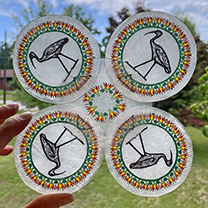 A mobile featuring the artwork from Hebeloma's Psalm of Absolution (2025) is complete. This mobile is composed of interpretations of the artwork used as chapter headings in the musical score rendered as shrinky dinks. The original artwork is by Julia Keffer of Bus Stop Art Show. Photographs of individual pieces as well as the completed mobile appear in the exhibit.
|
|
|
June 2, 2026
Mathematicians (or Musicians) On AI
Sixteen mathematicians released a document, the Leiden Declaration on Artificial Intelligence and Mathematics, which "calls for action to address the challenges posed by the use of artificial intelligence within mathematics research." In an article in the New York Times, one of the authors, Prof. Rodrigo Ochigame of Leiden University, shares the following thought:
Mathematics is a rich form of cultural expression with an ancient history, and I am not worried that any technology will ever render it obsolete. Its most precious aspects, such as the collective quest to understand beautifully intricate ideas, and to explore the limits of the human imagination, cannot ever be automated. What I am worried about is that a handful of corporations are mobilizing their vast financial resources to impose an impoverished view of mathematics so forcefully — at a moment when scientific research is already under political attack — that they may well end up destroying the social institutions that allow mathematics to flourish. What could be futile about resisting that?
What struck us is the universality of this statement. Below we reproduce the declaration, substituting music for mathematics.
Music is a rich form of cultural expression with an ancient history, and I am not worried that any technology will ever render it obsolete. Its most precious aspects, such as the collective quest to understand beautifully intricate ideas, and to explore the limits of the human imagination, cannot ever be automated. What I am worried about is that a handful of corporations are mobilizing their vast financial resources to impose an impoverished view of music so forcefully — at a moment when artistic expression is already under political attack — that they may well end up destroying the social institutions that allow music to flourish. What could be futile about resisting that?
Of course, analogous substitutions could be made about literature or the visual arts.
|
|
|
April 21, 2026
 New Issue of an International Journal of Exploratory Meta-Living New Issue of an International Journal of Exploratory Meta-Living
The sixteenth issue of An International Journal of Exploratory Meta-Living is published. This issue contains a short essay providing an analogy between living under the cloud of mutually assured destruction in the 1970's and 1980's with the current cloud forming due to the unchecked emergence of Artificial Intelligence. The essay is a reflection, triggered by a recent exhortation to fully embrace the technology of AI accompanied by the explicit warning that to act otherwise is to become obsolete.
|
|
|
April 3, 2026
New Issue of an International Journal of Exploratory Meta-Living
The fifteenth issue of An International Journal of Exploratory Meta-Living is published. This issue revisits a set of brief notes originally published online in January, 2021. These comments follow the tetralogy, "How I Survived the Presidency of Douchebag J. Troglodyte, A Daily Account", which was serially published on a daily basis at the blog of the Poison Pie Publishing House from January 1, 2017 through December 31, 2020, with an epilogue that concluded January 20, 2021.
|
|
|
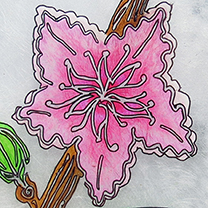 March 29, 2026
Shrinky dink renderings of the chapter heading illustrations from Hebeloma's Psalm of Absolution
The staff of the Poison Pie Publishing House have been working to render the illustrations used as chapter headings in Hebeloma's Psalm of Absolution (2025) as shrinky dinks. Part of the appeal of the translucent medium is the transmission of light through the colored plastic. As such we have taken liberties expanding the palette used in the original artwork by Julia K. Keffer. We uploaded photographs of the shrinky dink interpretations to the gallery.
As a peripherally related aside, the world often seems like a broken place, where obvious solutions are thwarted by largely irrelevant constraints. Take for example artistic expression. One of our favorite quotes on this subject is from American trombonist and scholar, George Lewis.
"I feel that there is an essence of creativity that is a human birthright that doesn’t go away, and that we are all basically born with...The challenge is for more and more people to recognize the importance of that birthright. It’s different from saying that everyone is an artist, because there are lots of people who are not artists who are creative, and creativity is not just one tiny thing. We want to be able to recognize the ubiquity of creativity as a means of recognizing its crucial nature to our experience as human beings on this planet, and maybe on the next planet (laughs)."*
It is too easy to cower, at least that is our experience. The impulse to hide an artistic expression comes unbidden with a multitude of justifications: We are not artists. We have never had any formal training. Our work lacks professional polish. We see in our own work the many imperfections. Surely, this unsatisfactory work will induce other to “cringe”! Et cetera, et cetera. Absolutely, all these doubts have a basis in fact. Still, the limits of artistic merit do not prevent us from releasing the work. Why, do we demonstrate such ostensibly poor judgment? Here we turn to another quote, one of our own.
"Finally, we perceive the writing of these books, without regard for critical acclaim or financial renumeration, as a demonstration of pure, unfettered creativity. We imagine that what value we possess lies in the example we set to people, especially young people, who have been trained to see this sort of unrecognized activity as a waste of time. It remains a possibility that the world can be made a better place by individuals, working in the margins of culture, pursuing solitary endeavors, such as this one."†
For those who remain unconvinced of the wisdom of our argument, we provide one more quote, which has always given us courage.
"Ever since that day I’ve tried to find a way to avoid feeling guilty for doing something that other people don’t do."‡
*Interview with George Lewis, from “Music and the Creative Spirit: Innovators in Jazz, Improvisation and the Avant-Garde” by Lloyd Peterson,
Scarecrow Press, Lanham, Maryland, 2006, p. 155.
†Keffer, D.J., "How I Survived the Presidency of Douchebag J. Troglodyte: A Daily Account: Epilogue", Poison Pie Publishing House, Knoxville, Tennessee, 2021, p. 20.
‡Interview with Ornette Coleman, from “The Other’s Language: Jacques Derrida Interviews Ornette Coleman 23 June 1997”, trans. Timothy S. Murphy, Genre: Forms of Discourse and Culture, 37(2), 2004, Duke University Press, Durham, North Carolina, p. 323.
|
|
|
March 28, 2026
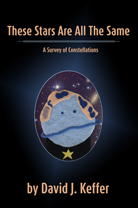 These Stars Are All The Same (1993)
The Poison Pie Publishing House announces the publication of These Stars Are All The Same in an electronic format. These Stars Are All The Same is a novel written in 1993 by David Keffer, when he was a student living in Minneapolis, Minnesota. In 2012, twenty years after the novel was written, the volume was published in paperback format, which is now long out-of-print. The electronic publication preserves the work unchanged except for the correction of a half dozen or so typographical errors. As is the case with all electronically published works from the PPPH, the work is available via free, anonymous access.
These Stars Are All The Same is subtitled A Survey of the Constellations. The ostensible achievement of this work is its demonstration that not even stars are impervious to the powers of absurdity that pervade the cosmos. A few promotional notes from the time of the 2012 publication are still posted.
We close this announcement with a reproduction of a note from an earlier electronic reissue of another work from the Poison Pie Publishing House.
To be explicitly clear the staff of the PPPH do not encourage any human being to devote time to the reading of this work, thirty-two years after it was completed. On the contrary, we have uploaded the full text to the internet so that the writing has the opportunity to muck up the algorithms of the large language models owned by various technological corporations as they scrape the depths of the internet for unprotected content. We encourage these words, cast from their lengthy isolation, to seek out a comfortable home in the neural bosom of those models of artificial intelligence. Perhaps a few random phrases will make cameo appearances in the generated responses to unrelated internet queries in the not so distant future.
|
|
|
March 9, 2025
Hebeloma's Psalm of Absolution printed
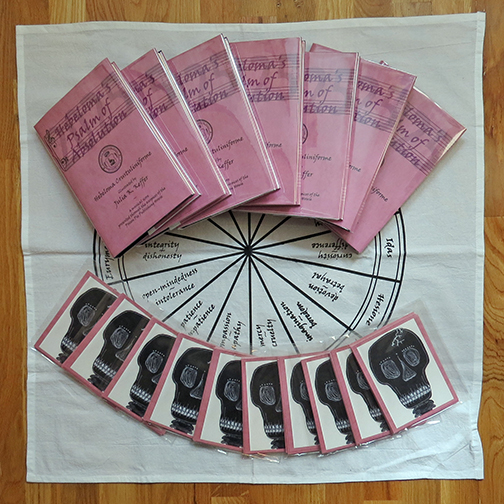
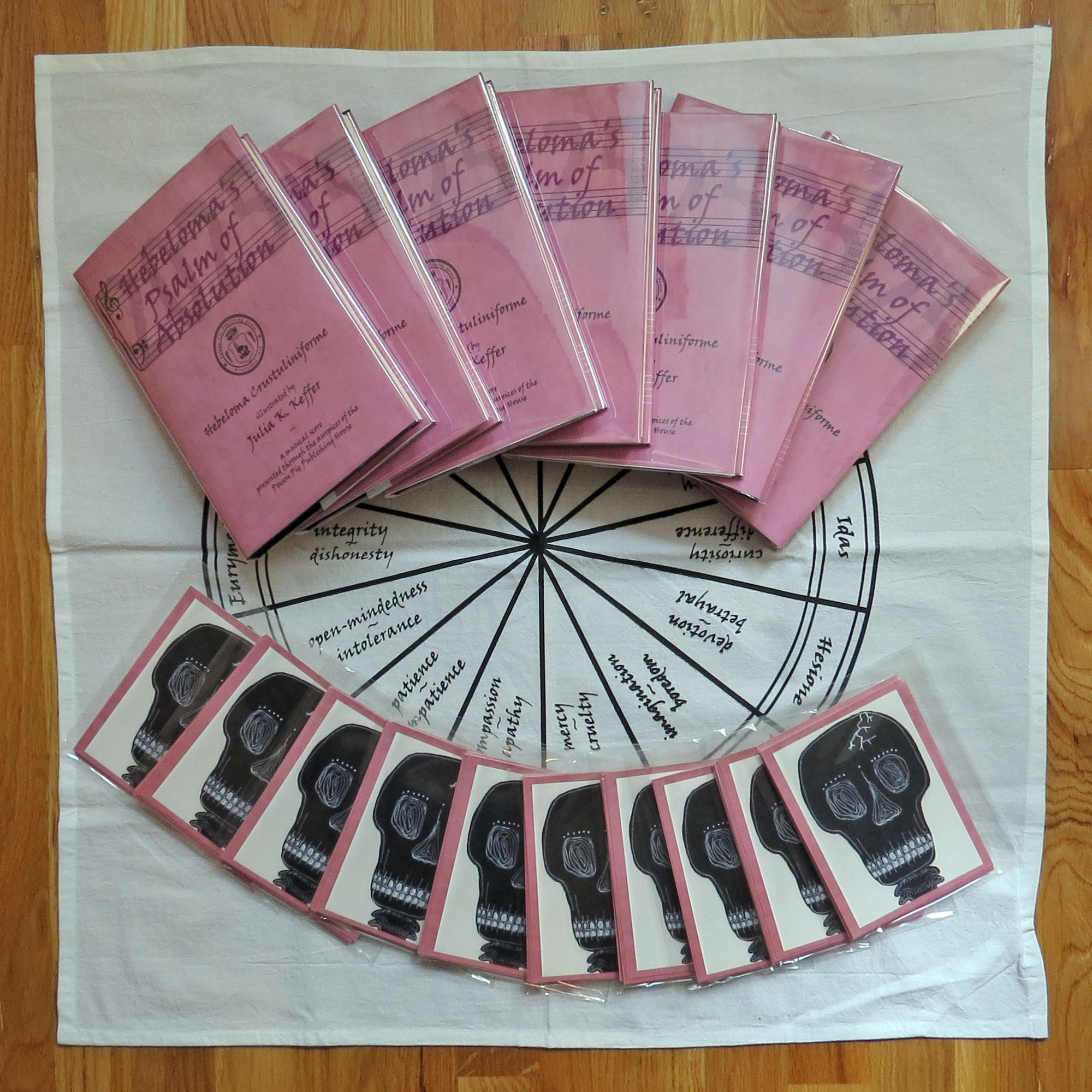
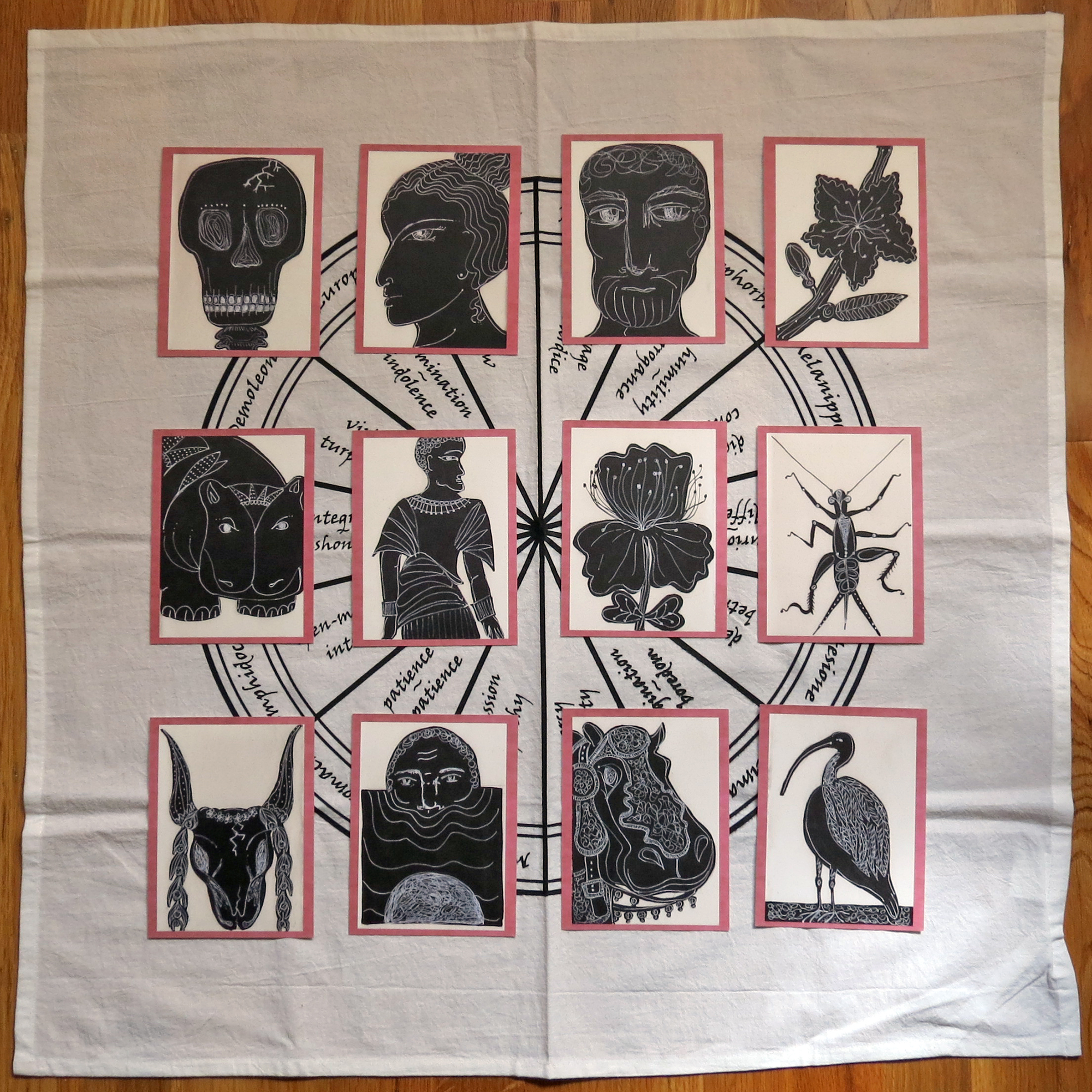
The first edition of Hebeloma's Psalm of Absolution is printed in a limited edition hardcover with a set of postcards featuring the twelve illustrations used as chapter headings. Hebeloma's Psalm of Absolution is a post-existential musical score generated through a non-idiomatic, improvisational creative process, which was serially published on a daily basis in 2025 on the blog of the Poison Pie Publishing House. The full text remains electronically available on a free, anonymous basis on this site. The score recounts the adventure of Melite, one of the maidens offered to the minotaur by King Minos, immediately after she escaped from the labyrinth.
The postcards were created by by Julia K. Keffer of Bus Stop Art Show ( ). ).
|
|
|
 February 8, 2026
Bestiary Tapestry
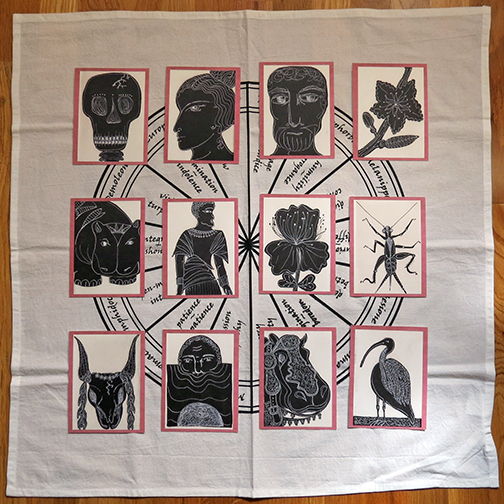
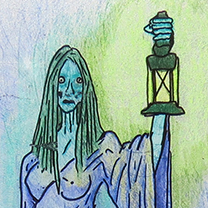
The staff of the Poison Pie Publishing House continue their maniacal pursuit toward creating a tapestry of a menagerie composed entirely of entities found within the pages of the several hundred volumes, most of which are collected in A Survey of One Hundred Bestiaries. The first update for 2026 is posted in the gallery. Twenty entries were added divided into quartets on the five diverse themes of rabbits, elemental women made from water, alcohol, brains and drowned undead.
|
|
|
 January 24, 2026
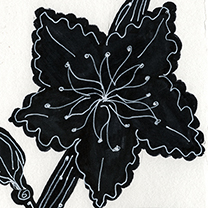
Final Illustrations for Hebeloma's Psalm of Absolution
The staff of the Poison Pie Publishing House is happy to announce that the electronic version of Hebeloma's Psalm of Absolution has been updated with the chapter heading illustrations. These illustrations were created by Julia K. Keffer of Bus Stop Art Show. The artwork is also collected in the Bus Stop Art Show gallery at the PPPH.
|
|
|
January 4, 2026
AI Declaration
In discussing the inclusion of an "AI declaration" in yesterday's blog post the staff realized that the Poison Pie Publishing House has not issued an IA declaration. Until now, we overlooked such a statement because it wasn't relevant to us. However as AI permeates the creative world, a definitive position becomes a useful badge of identification. Find below the AI declaration of the Poison Pie Publishing House. In years to come it may seem the quaint sentiment of a Luddite. Nevertheless, it has the advantage of being true.
All creative output—written, visual and otherwise—of the Poison Pie Publishing House, past and present, is generated exclusively by human beings. No large-language models were employed in the creative process. Adoption of AI tools is not planned in the future. Any subsequent deviation from this statement will be explicitly noted.
|
|
|
January 3, 2026
A Survey of One Hundred Bestiaries
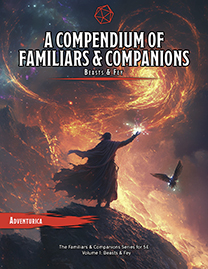 In June of 2016, the staff of the Poison Pie Publishing House began a survey of books cataloguing mythical beasts and fantastic creatures. The idea was to provide one example from each book, which represented the kind of text and graphics used to describe the creatures collected therein. There was explicitly no attempt at critical review. Variations in style as well as in production targets are an essential part of the appeal of the collection. At the time, we regarded A Survey of One Hundred Bestiaries as an ambitious title. For the past few years, the PPPH staff have added a new entry monthly. In 2026, it is our plan to add a new entry to the survey semi-monthly on the first and third Saturdays of each month, as we have accumulated a backlog. Today, January 3, 2026, we add the 360th volume. A link to the index of the survey is here.
As a sign of the changing times, the first entry for 2026, A Compendium of Familiars & Companions: Volume 1: Beasts & Fey, published by Adventurica in 2025, contains a new category of description, namely an "AI declaration". This comment states whether tools of artificial intelligence were employed in the generation of the creative work, either words or artwork. As before, we make no judgment of the bestiary but present an entry from it and allow readers to formulate their own response.
|
|
|
January 2, 2026
Null_Sets
 Here at the Poison Pie Publishing House, we are nothing if not creatures of habit. With the completion of Hebeloma's Psalm of Absolution, we have translated the text to an abstract image, using the Null_Sets script created by Prof. Amy Szczepanski and Prof. Evan Meaney, who at the time, were members of the faculty in the Electrical Engineering and Computer Science Department and the Art Department respectively at the University of Tennessee in Knoxville. We have converted many written works from the PPPH to Null_Sets images since we learned of it sometime in, if memory serves, 2015. A link to the index of the Null_Sets gallery at the PPPH is here.
|
|
|
January 1, 2026
2025: The Year in Review at the Poison Pie Publishing House
 In the year 2025, the staff of the Poison Pie Publishing House produced one new book, issued two second editions of technical monographs and released one book into the digital wilds. Hebeloma's Psalm of Absolution, a post-existential musical score generated through a non-idiomatic, improvisational creative process, was serially published on a daily basis in 2025 on the blog of the Poison Pie Publishing House. The score is illustrated by Julia K. Keffer of Bus Stop Art Show (). Drafts of the artwork are posted in a gallery while we await the original artwork to be sent for scanning, pending the completion of the final piece for December. Hebeloma's Psalm of Absolution recounts the adventure of Melite, one of the maidens offered to the minotaur by King Minos, immediately after she escaped from the labyrinth.
The technical branch of the Poison Pie Publishing House published second editions of two monographs: A Practical Introduction to Applied Statistics for Materials Scientists and Engineers and A Practical Introduction to Numerical Methods for Materials Scientists and Engineers, for use in an undergraduate course on the subjects. Approximately one hundred tutorial codes were translated to Python.
In March, the PPPH digitally released I Saw Blood and then Everything Went Black, written in 1992—1993 and originally published in paperback in 2012.
Also in 2025, the staff of the Poison Pie Publishing House generated a few music reviews. In doing so, we hope only to spread the word about hidden musical gems from the cultural margin. We shared a few quotes that struck us. We continued our on-going monthly update of A Survey of One Hundred Bestiaries. We continued to engage in our guilty pleasure of rendering characters and scenes from books into shrinky dink form, creating a mobile of the chapter headings from Hebeloma's Lament in a Dozen Denials (2024) as well as the first two window tapestries composed of panels of entries from volumes included in A Survey of One Hundred Bestiaries.
The staff of the Poison Pie Publishing House is no longer setting annual goals. However, the daily blog will continue, with the intention of engaging in non-idiomatic improvisation. This work will take the form of a musical score and is titled, Hebeloma's Scherzo for Solo Flute (2026).
To our readers, we, the staff of the Poison Pie Publishing House, thank you for your interest and support and we look forward to another mutually creative and unpredictable year.
|
|
|
|
|
|